
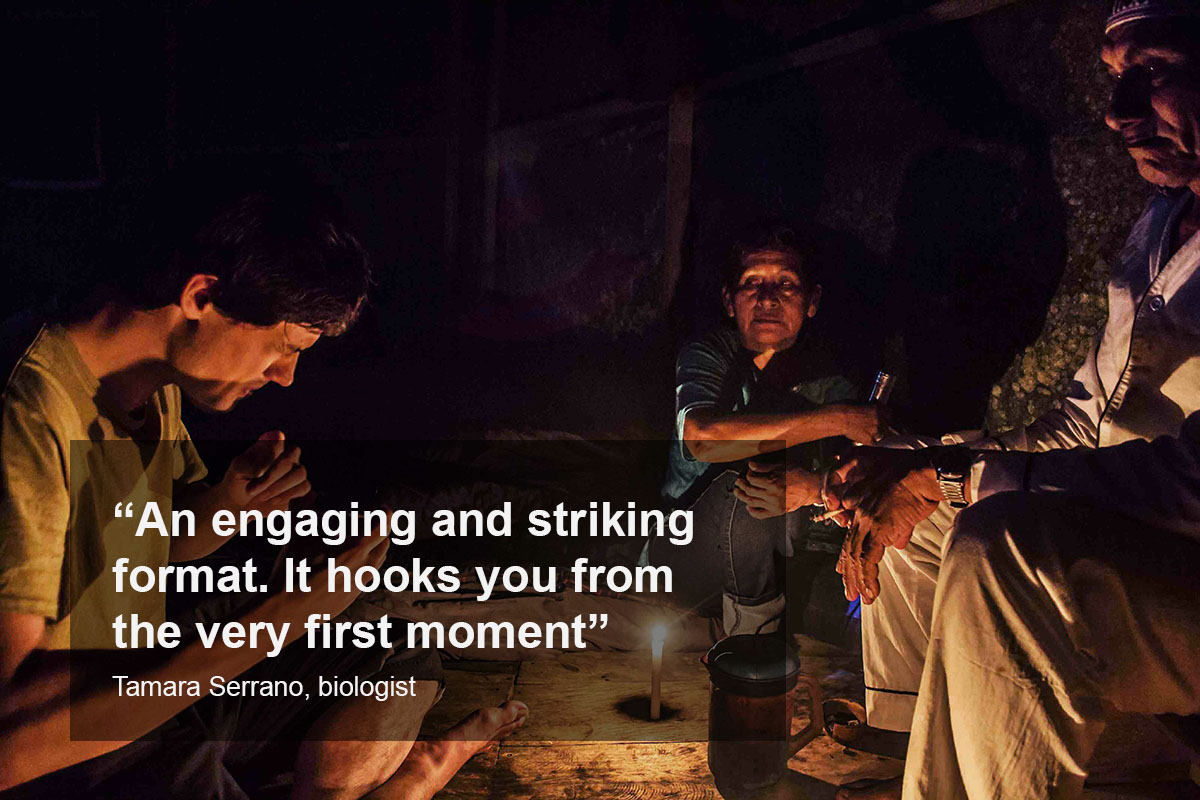
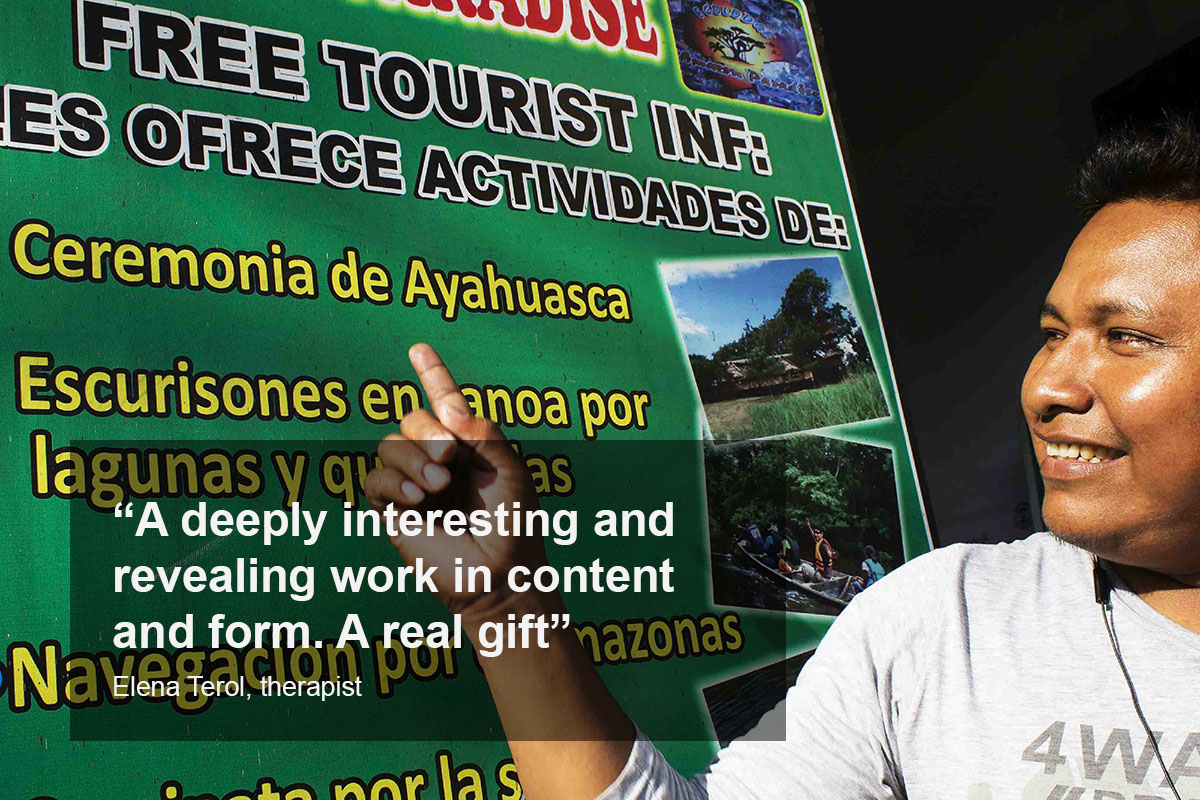
Ayahuasca, Iquitos and Monster Vorax...
...is a series of multimedia books that combine ethnographic research, literature and audiovisual creation to show the extraordinary phenomenon of ayahuasca in Iquitos, a shamanic mecca where the local collides with the global. This allegory of Western expansion is composed, so far, of two installments: the first one, like the series, is titled Ayahuasca, Iquitos and Monster Vorax; the second is entitled A Cash Crop.
I. Ayahuasca, Iquitos and Monster Vorax
Every year, thousands of westerners travel to the capital of Peruvian rainforest, in their quest to experience the powerful visionary remedy. In this way, an indigenous practice, condemned to disappearance by missionaries and bureaucrats, lives a new golden age. From the traditional healer who takes care of the locals, to the comfortable spiritual retreat centres frequented by foreigners, this book will immerse you in the thrilling world of Iquitos shamanism and the profound transformations that so-called “ayahuasca tourism” is provoking in traditional practices. And Monster Vorāx: the ecological implications of the increasing demand, and the disturbances that substantial incomes are producing in local societies.
II. A Cash Crop
The ayahuasca boom has generated a prosperous business of harvesting, planting, processing and exportation in Iquitos. Although ayahuasca drinkers often claim to experience an ecological awakening, their epiphany results in the eradication of the vine in large areas of the Amazon rainforest. A Cash Crop shows how a once abundant and commercially worthless plant species has become an increasingly scarce and expensive product of mass consumption. The book gives voice to people like: Abraham Guevara, owner of a small plantation that provides the vine to middlemen in Iquitos; Ronald Wheelock, maybe the world’s most productive cook; Elizabeth Bardales, owner of a thriving business for processing medicinal plants.
Why a multimedia book?
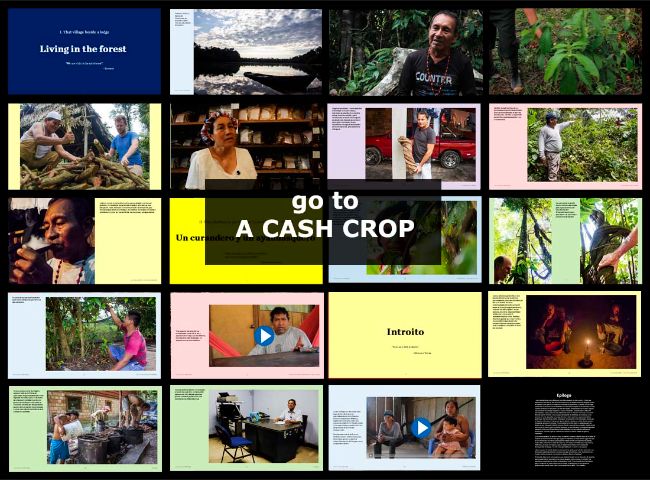
The irruption of the electronic screen has changed our way of communicating. Today we use texts, sounds, photographs and videos every day to tell and be told. Although the media also draws upon these elements to compose their stories, the result tends to lack coherence: the text of a journalist on the one hand; the images of a photographer; the films of a third party. More than a story, it is a juxtaposition of different stories. The series of multimedia books Ayahuasca, Iquitos and Monster Vorax is an original contribution to telling stories through the screen. Book, because it is a succession of pages that tell a story sequentially; multimedia, because texts, photographs, videos or sounds alternate throughout the pages.

People, their topics and problems
Both Ayahuasca, Iquitos and Monster Vorax and A Cash Crop are firm commitments to audiovisual ethnography—an effort to bring this fascinating social science discipline closer to a general audience. The major themes of contemporary Amazonian ethnography—shamanism, the integration of Indigenous peoples into the market economy, the overexploitation of natural resources, and the challenges of interculturality—are explored in both books through the everyday experiences of several dozen people who are part of the dynamic ayahuasca world in Iquitos. Between the tourists seeking psychedelic experiences for their memory albums and the elder healers mourning the loss of plants and knowledge, there exists an entire myriad of unusual characters that together form a compelling portrait of ayahuasca shamanism.
Visions

Is ayahuasca a visionary plant? That’s what they say, but for many people it’s a dark, nauseating experience.
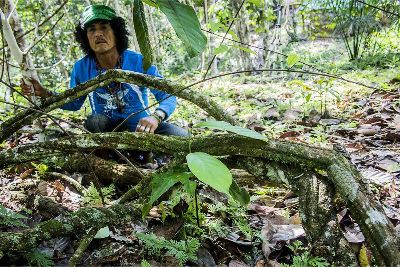
Megavine

Francisco Montes, owner of the Sachamama lodge, next to a huge specimen of Banisteriopsis caapi.
Gringo Shaman

Ron Wheelock, the Gringo Shaman, one of the most productive cooks of the world. He exports his remedy.
Overexploitation
High international demand is leading to its eradication in large areas of the Peruvian jungle.
"My friend"

Benigno Dahua, the village healer, wants to set up his own tourist lodge. “That's right, my friend,” he says.
Pioneer

Alan Shoemaker, one of the pioneers of the ayahuasca movement in Iquitos. He is critical of various abuses.
Epigenetics
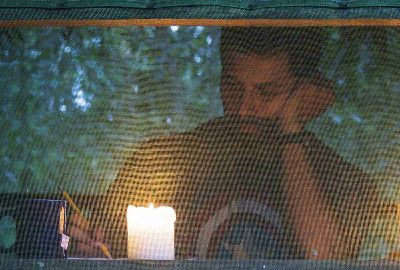
Colombian-American doctor Joe Tafur has a bold medical theory about how ayahuasca works.
Neighbor
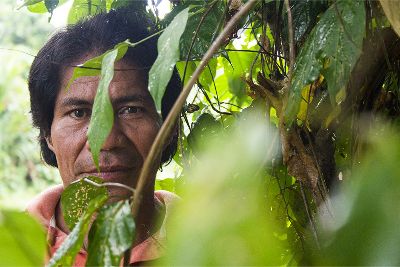
Elocario lives in a town near a lodge, which buys ayahuasca from him at a good price.
Plague

Javier da Silva knows what it is when ayahuasca invades a garden. “It’s like a plague”, he says.
Export

Bowie van der Kroon has been processing and exporting medicinal plants for fifteen years.
Engineer
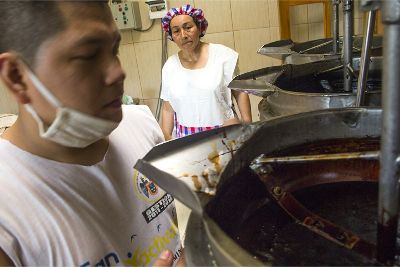
Forestry engineer Elizabeth Bardales has modernized the processing of ayahuasca.
Lodges

In Iquitos and its surroundings there are more than 50 lodges that offer “traditional” treatments to tourists.
Looting
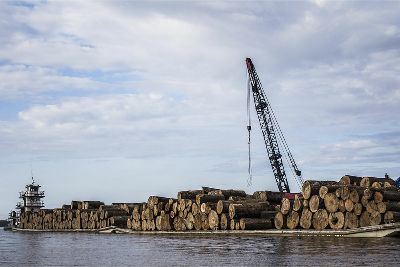
The Amazon rainforest has been and continues to be ransacked. Is Banisteriopsis a new example?
Plantation

Abraham Guevara has a small ayahuasca plantation and complains about middlemen.
Economy

The lodges in Iquitos employ many people from the surrounding villages to do various jobs.
War
The ayahuasquero Lucho Panduro, who has no qualms about talking about the habitual shamanic wars.
Carlos Suárez Álvarez
I tell stories about the people who inhabit the Amazon rainforest. Through novels, chronicles, documentaries, photographs, academic articles, and lectures, I portray everyday life without giving in to dominant stereotypes. I practice ethnography: the art of living alongside others, observing, and learning—so I can then tell their stories. Ethnography for all audiences.